
What Is Nutsedge and How Do You Get Rid of It?
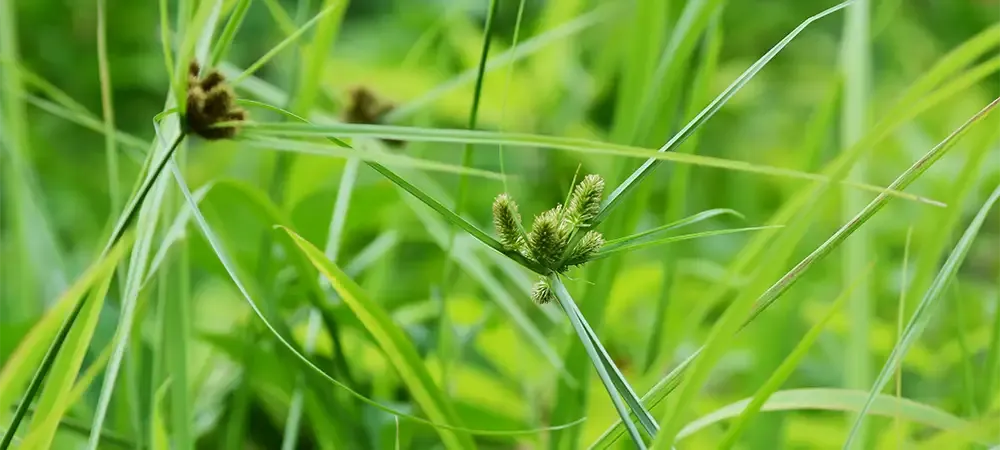
That patch of bright green grass growing faster than everything around it is probably not grass. It is nutsedge, and pulling it out will only make it spread faster.
Quick Facts
- Nutsedge is a sedge, not a grass. Standard broadleaf herbicides will not touch it.
- It spreads through underground tubers called nutlets that survive winter and regrow each spring.
- Wet, poorly drained soil is the most common reason nutsedge takes hold and keeps coming back.
What Is Nutsedge?
Nutsedge is a perennial weed in the sedge family, sometimes called nutgrass. It looks like grass but has a triangular, solid stem you can feel by rolling it between your fingers. True grass stems are round or flat. Leaves grow in groups of three from the base, and the blades are glossier and lighter green than typical turfgrass.
The two common species are yellow nutsedge (Cyperus esculentus) and purple nutsedge (Cyperus rotundus). Both behave similarly and require the same control approach. Nutsedge becomes most visible in midsummer when it outgrows the surrounding lawn two to three days after mowing.
Warning Signs in Your Lawn
- Patches that grow visibly taller a few days after mowing
- Glossy, light-yellow-green leaves brighter than surrounding turf
- Triangular stems you can feel when rolled between your fingers
- Dense clumps in low spots, near downspouts, or in consistently wet areas
- Seed heads radiating from the top of a stalk on mature plants
Why Is It So Hard to Kill?
The plant spreads through a network of rhizomes and small underground tubers called nutlets. A single plant can produce hundreds of nutlets in one season. When fall arrives, the top growth dies back but those nutlets stay dormant in the soil and send up new plants each spring.
Pulling nutsedge by hand breaks the stem away from the tuber network below. Those nutlets stay intact and produce new growth within days. In our experience, hand-pulling a mature nutsedge plant tends to stimulate more growth, not less. Standard broadleaf herbicides also have no effect because nutsedge has a different biochemical makeup than true grasses or broadleaf weeds.
How Do You Get Rid of Nutsedge?
Control requires three things working together: the right herbicide, improved drainage, and a denser lawn.
Use a selective post-emergent herbicide. Products containing halosulfuron or sulfentrazone (such as Sedgehammer or ProSedge) are absorbed through the plant and move down into the tuber system. Treat when nutsedge is actively growing with at least five to six leaves visible. Multiple applications spaced several weeks apart are typically needed because not all nutlets are active at the same time.
Fix drainage in problem areas. Nutsedge thrives in wet, compacted soil. If it keeps returning in the same spots, that area likely holds water. Lawn aeration reduces compaction, improves drainage, and helps thicken the turf to compete with nutsedge over time.
Build a denser lawn. Thick turf crowds out nutsedge by limiting the space and light it needs to establish. Consistent fertilization, proper mowing height (3 to 3.5 inches for cool-season grasses), and overseeding thin areas all reduce the conditions nutsedge exploits. Proper spring lawn care covers the seasonal timing that makes the biggest difference.
How Long Does It Take?
Expect two to three growing seasons of consistent management before a well-established nutsedge population is significantly reduced. Each treatment season depletes the nutlet bank in the soil. Skipping a year allows it to rebuild. Lawns with moderate pressure and corrected drainage can show meaningful improvement within a single season when treatments are timed correctly.
If nutsedge has spread across multiple areas or keeps returning despite treatment, a professional weed control program can identify whether the root cause is drainage, turf density, or a tuber bank that needs a structured multi-season approach. WeedX Fertilizing offers free lawn assessments to start with a clear picture of what you are actually dealing with. Request a free quote!